
Building a modern in-house creative team
At HealthPost Group, I led the creative function across multiple brands within a fast‑moving e‑commerce environment.
As the business grew, the challenge wasn’t just output. There were challenges building the structure, systems and ways of working that allowed a small in-house team to deliver consistently, across competing priorities, without losing quality or clarity.
My focus was not solely delivering creative, it was also shaping how creative work scales efficiently.
MY ROLE /
As Design Lead, I owned the transformation of the creative function from team development and creative direction, to the systems and ways of working to enable the team to scale.
Lead and developed the in-house Design Team
Owned the creative direction and output quality
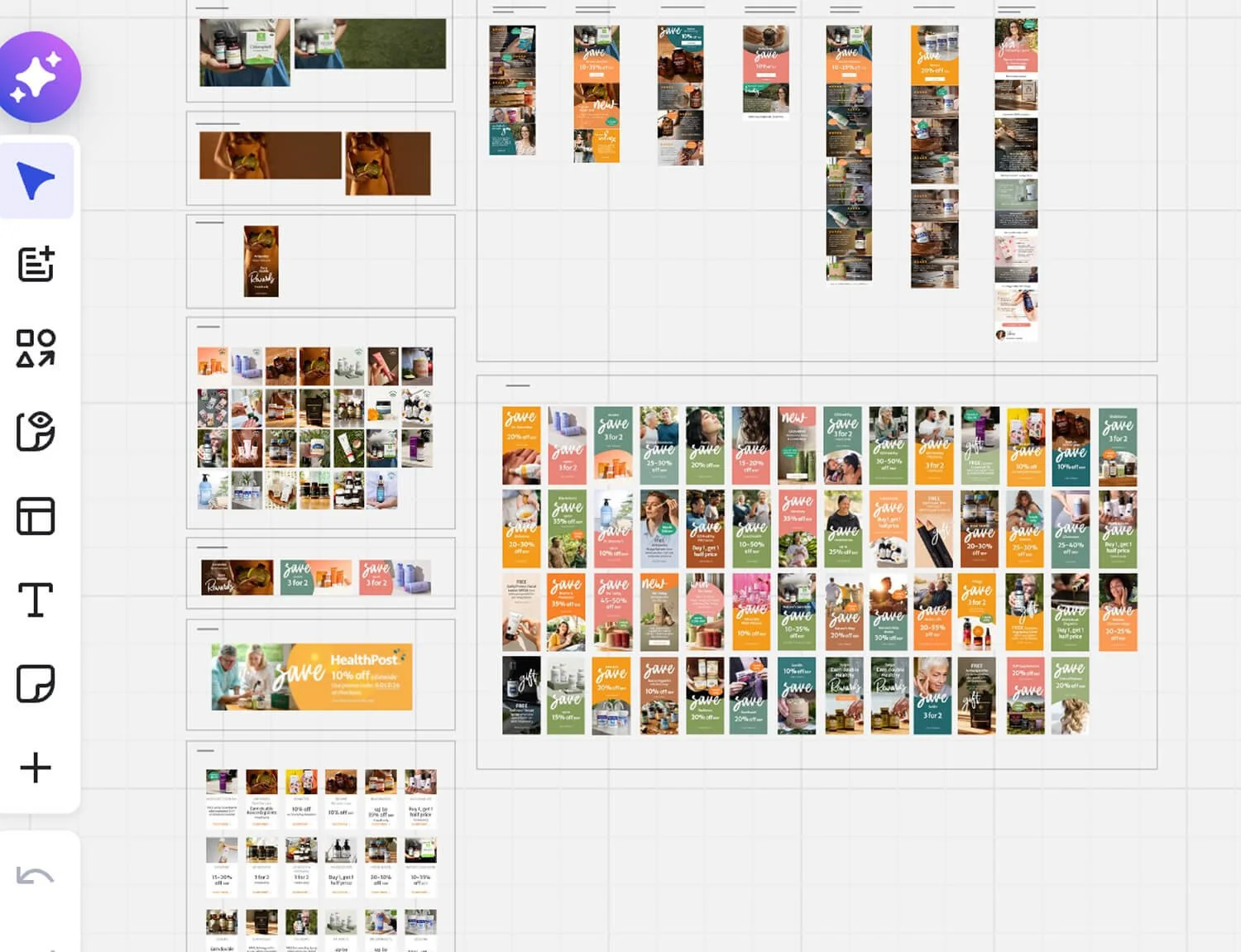
Established systems that enabled the Design Team to move from supporting one brand to three, while significantly increasing output across all channels.
Owned the quality of work the Design Team and ensured work was on-brand
Managed stakeholder relationships across the business
Through clearer planning, I ensured the smooth flow of work requests from internal stakeholders to the Team
Led team growth through hiring and mentoring
THE CHALLENGE /
As HealthPost Group expanded from one brand to three, the Design Team's workload increased significantly. Weekly email campaigns alone grew from three to as many as seventeen across the Group’s brands, alongside growing demand across digital, retail and marketing channels. It became clear that simply working harder wasn't a sustainable solution.
Key pressures included
Maintaining consistent brand expression across channels
Balancing campaign work with ongoing production
Rising volume of creative output without additional capacity
Competing priorities across multiple stakeholders
It became clear that sustainable delivery required stronger systems, clearer structure, and better alignment across the business.
WHAT I DID /
Rather than scaling output through pressure, I focused on building the conditions that made consistent and increased output possible.
Creative systems
To enable brand consistencies across three brands, I established creative frameworks, including templates and repeatable design approaches.
Workflow & prioritisation
An efficient team was imperative for them to meet strict weekly deadlines with a large workload.
Team development
With a weekly, heavy workload, ensuring the Design Team were up to date with latest workflow improvements and relevant design tips and tricks was important. I invested heavily in mentoring and creative direction, creating space for the team to build confidence, capability and ownership over their work.
Stakeholder alignment
Clear communication between the Design Team and internal stakeholders was important to help the team work without any bottlenecks. I worked closely with marketing, e-commerce and leadership teams to improve communication, align expectations and bring more clarity to what the team could realistically deliver.
THE IMPACT /
Organisational impact
The Design Team’s workload evolved from 1 brand to 3 brands without an increase in headcount
More consistent outputs across all 3 brands
Team impact
Clear and easy to follow templates and guidelines more consistent creative output across channels and brands
Improved efficiency in day-to-day delivery
Increased capability and confidence within the Design Team
Regular structured feedback and mentoring
KIND WORDS
“Andrea brought a level of attention to detail & commitment to getting things ‘right’ that you don’t always see very often.”
– The Future Collective workmate
REFLECTION /
I realise now that creative leadership isn’t just about raising the quality of the work. It’s about designing the conditions that allow good work to happen consistently and efficiently.
That comes from clarity, trust, structure, and a team that understands both the standards and the constraints they’re working within.