
Building & scaling an in‑house creative team
At HealthPost Group, I led the creative function across multiple brands within a fast‑moving e‑commerce environment.
As the business grew, the challenge wasn’t just output. There were challenges building the structure, systems and ways of working that allowed a small in-house team to deliver consistently, across competing priorities, without losing quality or clarity.
My focus shifted from simply delivering creative, to shaping how creative work could scale.
MY ROLE /
As Design Lead, I was responsible for:
leading and developing the in-house Design Team
overseeing creative direction and output quality
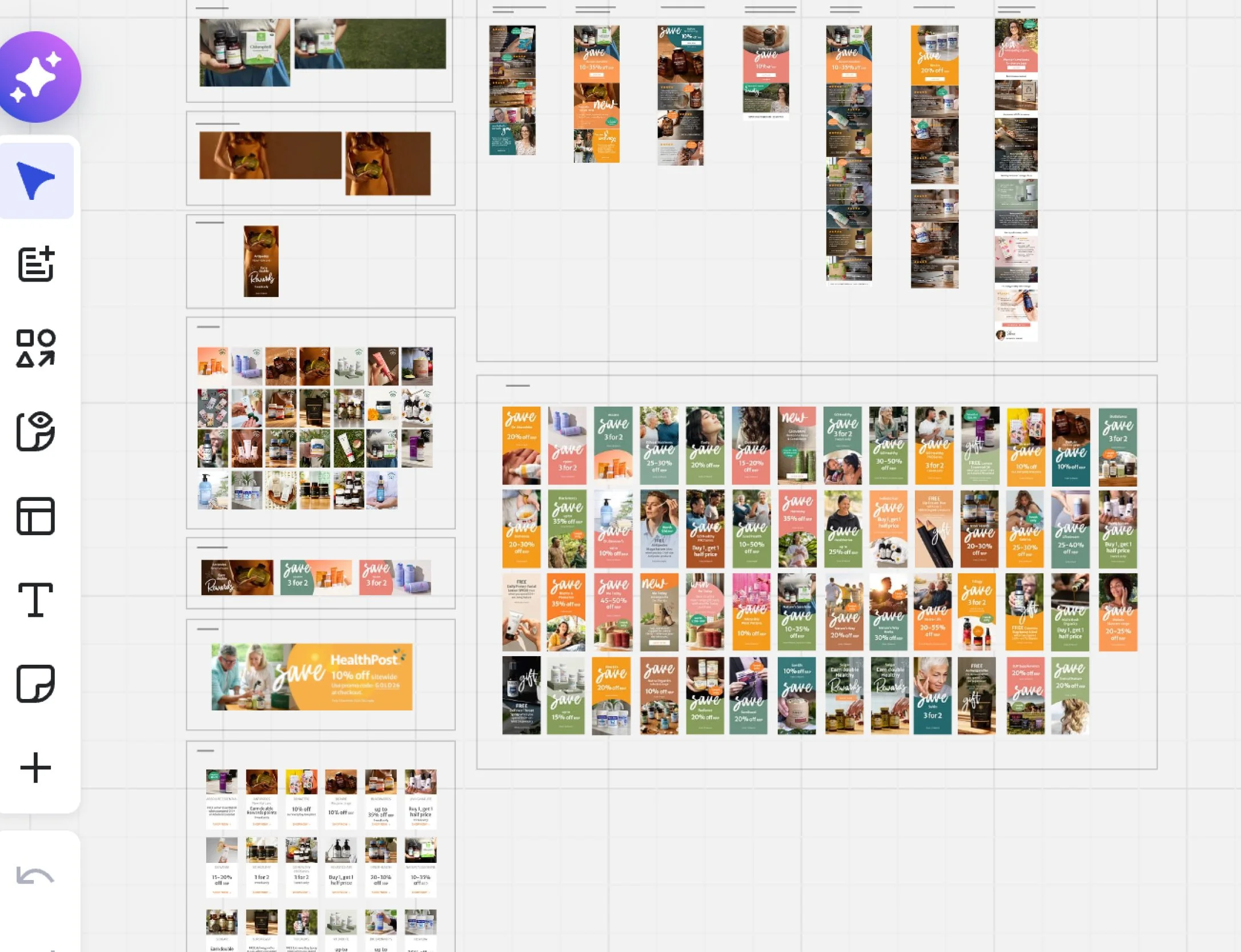
building systems that enabled the Design Team to move from supporting one brand to three, while significantly increasing output across all channels.
managing stakeholder relationships across the business
prioritising and resourcing incoming work
improving creative systems and workflows
supporting team growth through hiring and mentoring
THE CHALLENGE /
The team went from supporting one brand to three distinct brands across a broad e-commerce ecosystem, with increasing demand from marketing, retail and digital teams.
Key pressures included:
competing priorities across multiple stakeholders
maintaining consistent brand expression across channels
balancing campaign work with ongoing production
limited visibility of workload and resourcing
rising volume of creative output without additional capacity
It became clear that sustainable delivery required stronger systems, clearer structure, and better alignment across the business.
WHAT I DID /
Rather than scaling output through pressure, I focused on building the conditions that made consistent and increased output possible.
Creative systems
I introduced more structured creative frameworks, including templates and repeatable design approaches, to improve consistency across brands and channels.
Workflow & prioritisation
I helped refine briefing and intake processes so work was clearer from the start. I removed bottlenecks and friction points, so the Design Team could deliver on-brand and on time, even under pressure.
Team development
I invested heavily in mentoring and creative direction, creating space for the team to build confidence, capability and ownership over their work.
Stakeholder alignment
I worked closely with marketing, e-commerce and leadership teams to improve communication, align expectations and bring more clarity to what the team could realistically deliver.
THE OUTCOME /
The result was a more structured and resilient in-house Design Team. They are now better equipped to support multiple brands and a growing e-commerce operation.
Key improvements included:
more consistent creative output across channels and brands
clearer prioritisation and visibility of work across the team
improved efficiency in day-to-day delivery
stronger capability and confidence within the design team
better alignment between creative delivery and business needs
WHAT I LEARNED /
Creative leadership isn’t just about raising the quality of the work. It’s about designing the conditions that allow good work to happen consistently.
That comes from clarity, trust, structure, and a team that understands both the standards and the constraints they’re working within.